Seborrheic Keratosis Removal
Is cryotherapy right for my keratosis?
Keratosis means an overgrowth of keratin on the skin’s surface — and the type matters. Here’s the honest breakdown.
| Your situation | Details | What we’ll do |
|---|---|---|
| Treatable Seborrheic keratosis | Waxy, raised, brown/black/tan growths on the face, chest, shoulders or back — very common from middle age | Precision freezing; the growth scabs over and falls away over days to weeks |
| Consider Growths that rub or catch | SKs under bra straps, collars or waistbands that get irritated | Assessment first, then treatment in the same visit if suitable |
| Not treated Actinic keratosis or anything uncertain | Rough, scaly patches on sun-exposed skin can progress to skin cancer | Referred to your GP for proper management — never treated here |
Unsure which type you have? That’s exactly what the free assessment is for.
What is seborrheic keratosis?
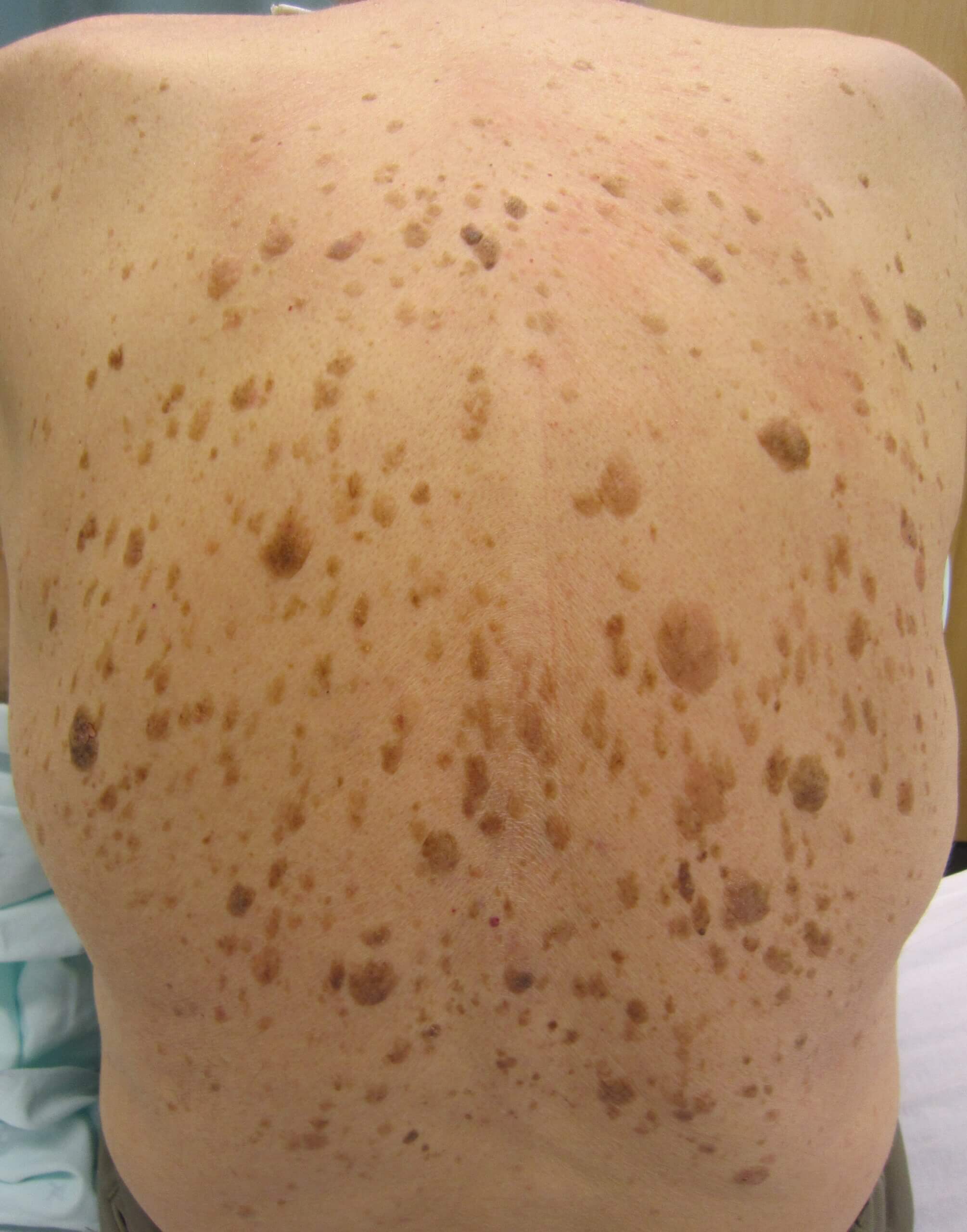
Seborrheic keratoses are non-cancerous growths caused by a build-up of keratin on the skin’s surface. Typically brown, black or light tan with a waxy, stuck-on appearance, they show up on the face, chest, shoulders and back, and become increasingly common from middle age onwards.
They pose no health threat, but many people choose removal because they’re unsightly, itch, or catch on clothing. Cryotherapy is a preferred option: no cutting, sessions often under a minute per lesion, minimal discomfort and no downtime — you can go straight back to your day.
After freezing, the treated area may redden and blister — a normal response. Over the following days to weeks the keratosis scabs over and falls away, leaving healthier-looking skin. Occasionally a lesion needs more than one session, and we review healing at your included four-week check.
What happens at your appointment
Assessment and treatment usually happen in the same visit at 124 Frimley Road, Camberley.
| Stage | Details | Good to know |
|---|---|---|
| 1 · Free assessment | We confirm the growth is a seborrheic keratosis — not actinic keratosis or anything needing a doctor | Suspicious or sun-damage lesions go to your GP |
| 2 · Freezing | A precise application of extreme cold, often under a minute per lesion | Mild, brief discomfort; redness and blistering afterwards are normal |
| 3 · Healing & check | The growth scabs over and falls away over days to weeks | Four-week check included; some lesions need a second session |
Aftercare: protect the treated area from the sun (sunscreen or clothing), clean it gently each day and cover with a plaster if needed.
Seborrheic keratosis removal prices
Transparent pricing — the four-week healing check is included.
| Service | Price | What’s included |
|---|---|---|
| Consultation | Free | If your lesion isn’t suitable for treatment, you’ll be referred to your GP — no charge |
| Seborrheic keratosis removal | £69.99 | Consultation, treatment of one lesion and a check-up four weeks later |
| Each additional lesion (same visit) | £29.99 | Treated at the same appointment as the first |
| Follow-up treatment (within 6 weeks) | £29.99 | Only if the lesion needs more than one application |
If we can’t treat your lesion you’ll be referred to your GP and pay nothing — and if you decide not to proceed on the day, there’s no charge either. Follow-up treatments must be booked within 6 weeks of the original appointment.
How it works
Book online in 2 minutes
Same-day appointments are often available thanks to the size of our team.
Free suitability assessment
Our clinician examines the lesion first — anything suspicious is referred to your GP, never treated.
Treatment + 4-week check
The lesion is frozen in seconds; four weeks later we check it has healed properly.
Other cryotherapy treatments
We treat a range of benign skin lesions — each has its own guide.
Frequently asked questions
How do I know it’s seborrheic and not actinic keratosis?
You often can’t tell by yourself — that’s the point of the free assessment. Seborrheic keratoses look waxy and “stuck on”; actinic keratoses are rough, scaly patches on sun-exposed skin and can progress to skin cancer, so they’re managed by your GP, not treated at the pharmacy.
Does the treatment hurt?
There’s mild, temporary discomfort during the freeze — typically well under a minute per lesion — and the area may feel warm or sting briefly afterwards. No anaesthetic is needed.
What does healing look like?
Redness and sometimes a blister at first — both normal. The growth then scabs over and falls away over the following days to weeks. Protect the area from the sun while it heals.
Will one session be enough?
Often, yes — cryotherapy works particularly well on seborrheic keratosis. Thicker lesions occasionally need a second application, which is £29.99 within 6 weeks of the original treatment.
Can you remove several at once?
Yes. The first lesion is £69.99 including consultation and the four-week check; each additional lesion in the same visit is £29.99.
Is removal medically necessary?
Usually not — seborrheic keratosis is harmless. Most people remove them for comfort or cosmetic reasons. We’ll always tell you honestly if treatment isn’t needed.
Rated by 1,200+ patients of our Camberley pharmacy and clinics.
GPhC registered pharmacy 1105418 · Superintendent pharmacist Jirina Thielens (GPhC 2069634).
This guide follows UK national health guidance (NHS) and was last reviewed in August 2026. Recommendations can change — your consultation always reflects the latest advice.
Ready for smoother skin?
Free assessment, honest advice on what needs treating (and what doesn’t) — book at VSM Pharmacy Camberley.
Book Your Skin Assessment