In 2017 the World Health Organisation declared the UK to have ‘measles-free status’ due to just 284 cases throughout the country.
Unfortunately, this is no longer the case. The UK is now one of the worst effected countries in Western Europe with 1,603 reported cases in 2023.
While measles might not be too serious for adults it can make children very ill with, as the UK’s Health Security Agency (HSA) Professor Dame Jenny Harries has said, ‘life changing complications.’
So far in 2025 there has been 109 cases reported in April and 86 in May. The Uk Health Security Agency is concerned that more cases will follow over the summer months when families travel for holidays or to visit friends. Outbreaks have been reported this year in European countries including Spain, France, Italy and Germany.
Thailand, Indonesia, Pakistan, India, Nigeria and Romania have some of the largest number of measles cases worldwide.
The English vaccination average is just 83.9%, which is long way below the World Health Organisation’s target of 95%. In London the uptake of the MMR2 vaccine at 5 years is one of the lowest in the country at just 73.3%.
How is Measles Spread?
The measles virus spreads very easily. Coughing and sneezing spreads the virus from the air. Touching things someone has coughed or sneezed on also spreads the virus. It is easy to catch measles if you are in the same household or in a place where people are close together like schools and nurseries.
What are Measles Symptoms?
At first you may think you have caught a cold. The first symptoms start with a blocked, runny nose. Sneezing, a cough and a temperature. After that you will notice white spots in your mouth.
A few days later you’ll get a rash which often starts on your face and then spreads to the rest of your body. Unlike chickenpox, the rash doesn’t itch.
How Long is Measles Contagious?
You can spread the rash from the first day you have symptoms, which according to the NHS is about 4 days before you get the rash. You remain infectious until 4 days after the rash appears.
During this time avoid mixing with other people and don’t share towels or bedding. Keep your hands clean by washing them regularly with soap and water. Use tissues if you sneeze and throw them in the bin immediately.
What Serious Problems Can Measles Cause?
Young children, people who have a weakened immune system and pregnant woman are more at risk of developing complications from measles.
Common complications include diarrhoea, ear infections, dehydration and pneumonia. Rare complications include encephalitis (inflammation of the brain) and convulsions.
Pregnant women could have a premature birth, miscarriage or stillbirth or a baby with a low birth weight.
What is the Measles Vaccine?
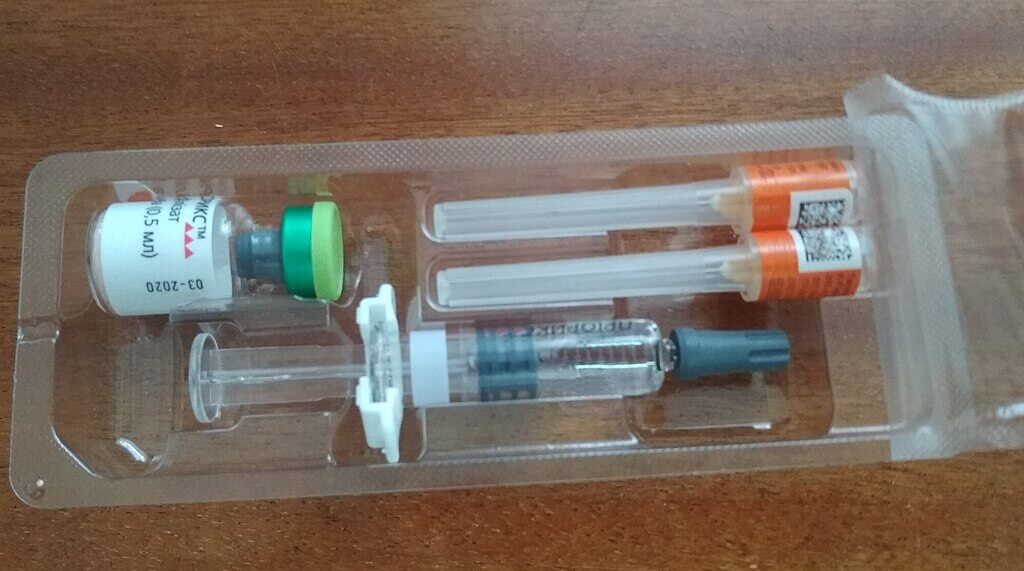
Measles is part of the MMR vaccine which protects against measles, mumps and rubella. If you didn’t have the vaccination when you were younger, or your children weren’t vaccinated because of the controversy about a link between MMR and autism, you can read the information on the autism speaks website which states that vaccines do not cause autism.
Can Anyone Have the Vaccine?
You can’t have the vaccine if:
- You are pregnant
- You have a weakened immune system
- You are taking medication that supresses your immune system
- You have suffered anaphylaxis as a result of an ingredient in the vaccine – Patient information is available for the MMRVAXPRO and the PRIORIX MMR
How Can the Pharmacy Help?
If you are not eligible for an MMR vaccine on the NHS, you can pay and have it administered privately at the pharmacy. The cost is £49.99, and you will only need one dose. If you are having the vaccine before travelling, you need to have it done at least 6 weeks before you travel. This vaccination is suitable from 1 year old.
You can book your appointment online through the Travel Clinic or come into the pharmacy and speak to a member of staff. You can also give us a call on 01276 21002.