For most adults and children, chickenpox is a mild virus that lasts around 2 weeks and then it gets better. But for some, especially babies, chickenpox can have serious complications.
The new MMRV Vaccine for children
This year the MMR vaccine will also include chickenpox and is now called the MMRV vaccine which stands for measles, mumps, rubella and varicella (chickenpox). The vaccine will protect babies and young children from serious complications like inflammation of the brain (encephalitis), sepsis and pneumonia.
Chickenpox and Pregnancy
If you have never had chicken pox and you catch it during pregnancy your baby has a small risk of developing a rare condition called Fetal Varicella Syndrome (FVS).
FVS can cause a baby to have bowel and bladder problems, eye defects, skin scarring, developmental delays and shortened limbs.
If you’re pregnant and have chickenpox, you can also become ill yourself with pneumonia, which is more common if you are a smoker.
Chickenpox risks for people with weakened immunity
Complications from chickenpox are also a risk if you have a weakened immune system. There are many conditions and treatments which might lead to a weakened immune system, so it is always best to check with your GP or pharmacist. Some common reasons are if you:
- Are being treated on a long-term basis for conditions such as psoriasis, lupus, inflammatory bowel disease or rheumatoid arthritis.
- Receiving chemotherapy or radiotherapy
- Have HIV
- Taking medicines that could increase your risk of infection
- Have a blood cancer (leukaemia, lymphoma or myeloma)
If you think you have come into contact with someone who has chickenpox see your doctor as you may need to take antiviral tablets.
How do you catch chickenpox?
Chickenpox is spread by being in contact with someone who already has either chickenpox or shingles. From droplets in the air caused by coughs and sneezes and also by touching anything that has the fluid from the blisters on it.
What causes chickenpox?
Chickenpox is caused by the virus, Varicella Zoster. It is a human herpes virus, and it stays in your body for life. Chickenpox commonly affects children who then become immune to chickenpox. However, in later life the virus can reactivate and cause shingles.
What are the symptoms?
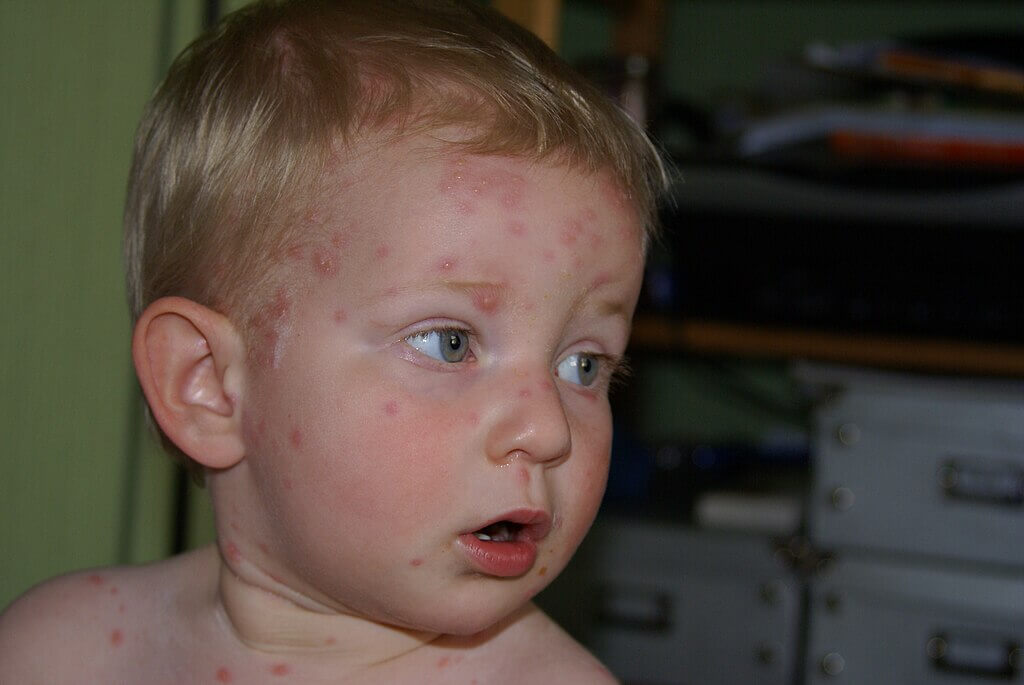
The first symptom is usually a red rash. This can appear anywhere on your body. You might also have aches and pains and a high temperature. You might feel like you have flu with a headache, a cough and a runny nose. After that:
- You will notice the appearance of small spots.
- The spots then fill up with fluid, which itch. Itching causes them to burst and can cause scarring
- The spots then form scabs
- The scabs fall from your skin
How do you treat chickenpox?
If there are no complications the best way to treat chickenpox is to stay at home until the spots have scabbed over. Take paracetamol for any pain and use cooling creams or gels from the pharmacy to treat itching. Don’t give Aspirin to under 16s or take ibuprofen for pain unless advised by your doctor. This is because ibuprofen can cause a skin infection.
Can adults have a vaccine?
Yes. It is a good idea to be vaccinated, especially if you have never had chickenpox and you are thinking about starting a family. You will be advised to avoid becoming pregnant for 1 month after you have had the last dose of the vaccine.
Is it suitable for everyone?
No. The vaccine is live. That means it contains a weak version of the chickenpox virus. This makes it unsuitable for:
- people with weakened immunity
- pregnant women
- babies under the age of 9 months
- anyone who has previously had anaphylaxis (allergic reaction) to an ingredient in the vaccine – The UK uses two companies, Merck and GlaxoSmithKline
- People who have had an MMR in the past 4 weeks, or are due to have an MMR within 4 weeks
How many doses are there?
There are two doses. They are normally given to children and adults 4 to 8 weeks apart. Babies between 9 and 12 months have the vaccine 3 months apart.
How can the pharmacy help?
Here at the pharmacy, we will be introducing a chickenpox vaccine in the future. Keep a look out for further information here on the website and in the shop. We can also advise you about the most suitable creams and gels to treat itching and recommend paracetamol brands to help relieve pain.